









Older properties with solid walls present a specific problem for anyone trying to reduce heat loss: there is no cavity to fill, external cladding is often restricted or impractical, and full stud-wall systems consume floor space. PIR insulated plasterboard offers a more compact route. Fixed directly to internal walls, it adds a thermal layer without significant disruption and leaves a surface ready for decorating.
For solid-wall properties, it offers one of the more practical internal upgrade routes, and this article covers what the product actually is, how it performs against Building Regulations targets, and what to weigh up before committing to it on a project.
What PIR Insulated Plasterboard Is
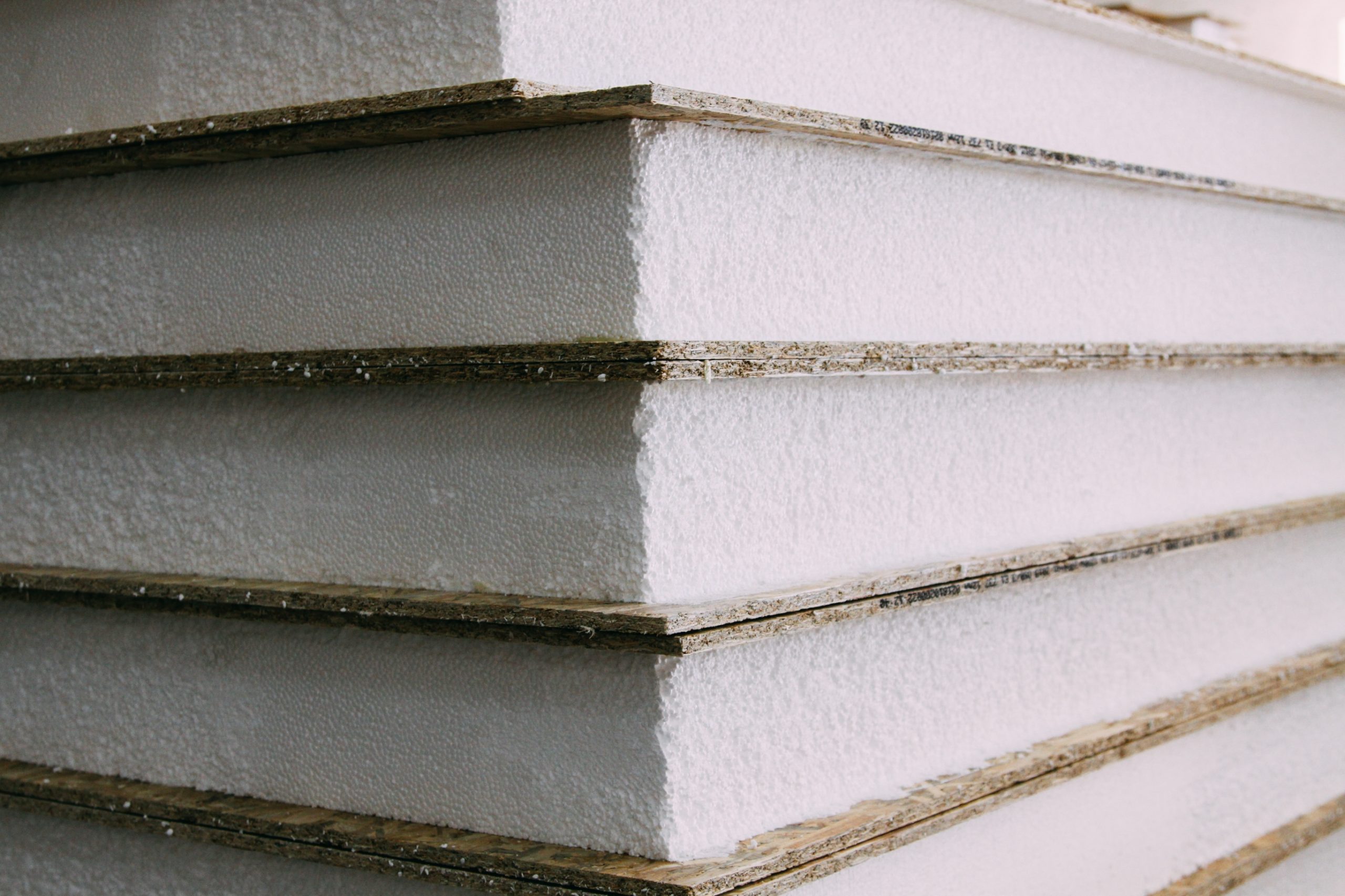
PIR insulated plasterboard is a composite board that bonds a layer of rigid polyisocyanurate (PIR) foam to a standard plasterboard facing. The PIR layer does the thermal work; the plasterboard provides a surface for skim, paint, or tiling once fixed.
The foam core typically carries a thermal conductivity of around 0.022 to 0.023 W/mK, among the better-performing rigid insulation materials available in this composite format. That efficiency allows the board to deliver a meaningful U-value improvement without the same thickness requirement as mineral wool or expanded polystyrene alternatives.
Boards are available from manufacturers including Celotex and Gyproc, ranging from around 27mm up to 100mm total thickness. Online Insulation stocks a wide range of insulated plasterboard options across these brands, covering both standard and higher-performance specifications suited to renovation and retrofit projects.
How PIR Insulated Plasterboard Fixes to a Wall
The board fixes directly to the inside face of an external wall, using either adhesive or mechanical fixings. The fixing method depends on the condition of the existing wall surface.
Uneven masonry, crumbly render, or walls with a history of movement call for mechanical fixings. These hold the board securely regardless of surface irregularities and allow adjustment during installation. Smooth, structurally sound walls can take adhesive bonding, which is generally faster and requires fewer penetrations.
Once fixed, the plasterboard face accepts a skim coat or direct decoration depending on the specified finish. Associated works, repositioning sockets, extending window reveals, adjusting skirting boards, need to be factored into the project programme from the outset. Each treated wall typically adds between 30mm and 100mm of depth to the room, depending on the board thickness selected.
What Thermal Performance the Boards Actually Deliver
Part L of the Building Regulations sets the minimum thermal performance standard for any wall element being renovated. For most existing walls, the target is a U-value of 0.30 W/m²K or better. PIR insulated plasterboard can achieve this on many solid-wall constructions, depending on board thickness and the properties of the existing wall.
A 72mm board fixed to a standard 215mm solid brick wall will typically produce a U-value in the range of 0.28 to 0.30 W/m²K. Thicker boards push performance further where the thermal brief is more demanding. Slimmer options, 27mm to 52mm, suit situations where available wall depth is the primary constraint, though they may not reach the Part L threshold on their own.
Junctions at floor edges, ceiling lines, and window reveals need careful detailing. These are the points where thermal continuity breaks down if the insulation layer is not extended or adequately overlapped. Addressing thermal bridging at these junctions is part of achieving a compliant, performing installation.
Is PIR Insulated Plasterboard Worth the Investment?
For solid-wall properties, plasterboard with insulation consolidates the thermal layer and wall finish into a single board. A full stud-wall system with separate insulation batts takes up more depth, involves more components, and typically requires more trades on site. PIR-backed boards reduce that complexity.
Supply costs vary by thickness and brand, with additional costs for fixings, associated works, and labour. The return shows in reduced heat loss through external walls, lower heating demand over time, and Part L compliance where renovation work triggers that requirement.
For rooms with multiple solid external walls, the improvement in surface temperature is typically felt quickly. Walls that previously felt cold hold heat more effectively once the thermal layer is in place, and the room requires less heat input to maintain a comfortable temperature.
Moisture Risk and What to Check Before Installation
Internal insulation changes the temperature profile of the wall behind the boards. The masonry sits in a colder zone than before, which raises the risk of interstitial condensation if moisture is present or poorly managed. This is the main technical risk with the method and needs to be considered at the specification stage, not after the boards are up.
Before installing PIR insulated plasterboard, assess the wall for existing damp. Rising damp, penetrating damp through failed pointing, and any active moisture ingress all need remedying first. Once the boards are fixed, the wall face is no longer accessible.
Adequate background ventilation also needs to be in place, particularly in kitchens, bathrooms, and utility areas where moisture loads are higher. A condensation risk analysis may be appropriate for more complex wall constructions or where the existing damp record is unclear.
Ready to Specify the Right Board for Your Project?
PIR insulated plasterboard is a space-efficient, practical option for improving thermal performance on solid internal walls. Correctly specified, it meets Part L targets, consolidates insulation and wall finish into a single product, and suits retrofit projects where external or cavity-based solutions are not available.
Select board thickness based on your U-value target, the available wall depth, and the starting thermal performance of the existing construction. Resolve any damp issues before installation begins and confirm the ventilation strategy is adequate. For detailed performance data, review the manufacturer specifications for the board being considered.
Browse the full range of insulated plasterboard at Online Insulation Sales to compare board thicknesses, brands, and thermal performance ratings for your project.
FAQs
What thickness of PIR insulated plasterboard do I need for a solid wall?
For most standard solid brick walls, a board between 52mm and 72mm will achieve a U-value of around 0.30 W/m²K. Thicker boards are needed where the wall has a higher starting U-value, or a more demanding thermal target applies.
What is the difference between PIR insulated plasterboard and standard plasterboard?
Standard plasterboard has no insulation layer. PIR insulated plasterboard bonds a rigid foam core to the board face, providing thermal resistance in addition to a surface ready for decoration.
Can PIR insulated plasterboard be fixed with adhesive?
Yes, on smooth and structurally sound wall surfaces. Uneven or weaker masonry calls for mechanical fixings to ensure reliable contact and a level finish.
Does PIR insulated plasterboard meet Building Regulations requirements?
When correctly specified for the wall construction, PIR-backed boards can achieve the U-value targets required under Part L for renovation work.
Where can I buy insulated plasterboard?
Specialist suppliers stock a range of brands and thicknesses. Online Insulation carries Celotex, Gyproc, and similar systems for both trade and homeowner supply.